Malnutrition and poor nutrition remain significant public health challenges in rural Nepal, particularly in remote and mountainous regions. Limited access to diverse and nutritious foods, poverty, low awareness of proper infant and young child feeding practices, and inadequate health and sanitation services contribute to the high burden of undernutrition. As a result, many children and women suffer from conditions such as stunting, wasting, and micronutrient deficiencies, which can negatively affect growth, cognitive development, and overall health.
Nirmala Malla (pseudonym), a 10-month-old female child, is the daughter of Siddha Malla (Pseudonym) and originally from Chhayanath Rara Municipality Ward No. 5, Mugu. Her family of five rely primarily on subsistence farming and livestock rearing, raising around 50 sheep.
In search of better income opportunities, Siddha and her husband migrated to Kathmandu, later returning to Libru, shortly after Nirmala’s birth. Within a month of giving birth, Siddha became pregnant again. Due to the physical and emotional demands of her own early pregnancy, coupled with a lack of family support, Nirmala did not receive adequate care or feeding. This critical lapse in care contributed to her rapid health deterioration and the onset of severe malnutrition.
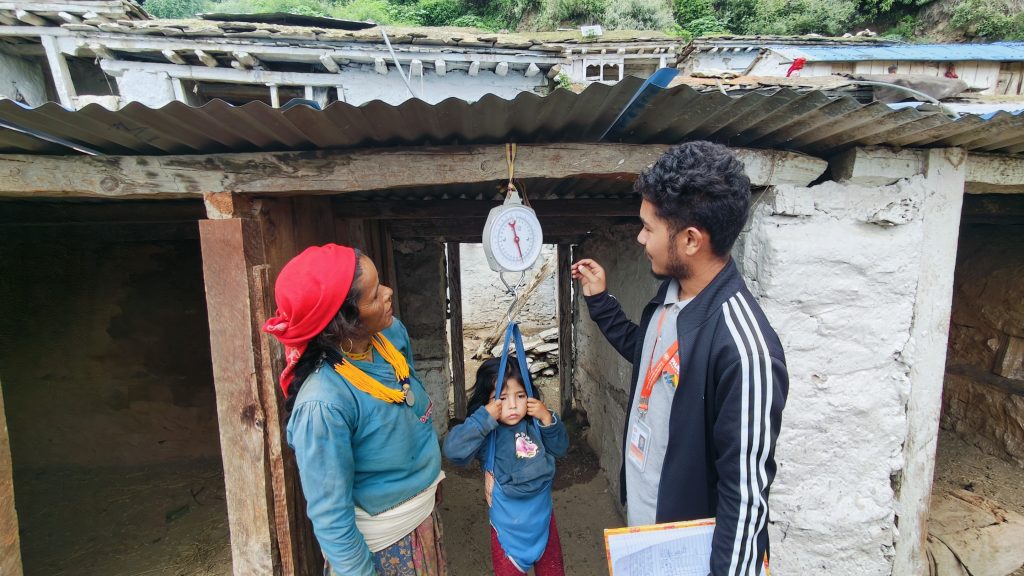
Nirmala was brought to the PHASE Nepal-supported health post, reporting symptoms of persistent fever, irritability, poor feeding, and noticeable weight loss. The health team promptly conducted an assessment, which revealed the following: temperature 37.9°C, a respiratory rate of 42 breaths per minute, a pulse of 115 beats per minute, a weight of 6.3 kg, and a Mid-Upper Arm Circumference (MUAC) of 10.5 cm. Based on these findings, Nirmala was diagnosed with acute malnutrition. Her mother was counseled on breastfeeding, complementary feeding, and the importance of maintaining nutritional hygiene. The team also recommended referring Nirmala to the District Hospital in Mugu for further treatment.
During a routine home visit, the PHASE Nepal team observed that Nirmala’s condition had significantly worsened. Her MUAC had dropped to 8.9 cm, her weight had decreased to 5.1 kg, and she showed signs of dehydration. Despite these alarming findings, the family had not yet taken her to the hospital. The health team once again emphasized the urgency of immediate referral to the district hospital for advanced care.
Eventually, her mother took her to the Gamgadhi District Hospital, where she was admitted for four days and treated for acute malnutrition. She was provided Ready-to-Use Therapeutic Food (RUTF) and advised to return for a follow-up visit in two weeks.
However, Nirmala’s mother reported that Nirmala initially refused the RUTF, and they were unable to return for the scheduled follow-up. Despite this, she reported gradual improvement in Nirmala’s condition through continued care at home.
During the subsequent follow-up call, her mother expressed regret over the inability to provide sufficient care for Nirmala due to her second pregnancy. Both parents acknowledged that a combined burden of limited financial means, lack of access to healthcare, and poor family support had contributed to their child’s malnutrition. They appreciated the consistent support and home-based follow-up provided by the PHASE Nepal team, which played a key role in helping them understand the severity of the issue and eventually taking action.
As of now, Siddha has given birth to her second child. This development further highlights the urgent need for family planning, maternal health services, and sustained nutritional counseling in rural Nepal.