
Bajura is one of Nepal’s most remote mountain districts, where many communities rely on narrow, unpaved roads as their primary connection to health facilities, markets, and administrative centers. Most of these roads are seasonal gravel tracks rather than blacktopped highways. During the monsoon season, heavy rainfall makes the roads slippery, unstable, and difficult to navigate. Sharp bends, steep cliffs, loose gravel, and the absence of protective barriers increase the risk of accidents, making road traffic incidents an unfortunate but frequent reality for people living in the region.
On 2083 Shrawan 4, a serious road traffic accident occurred on the rural mountain road connecting Dhulachaur and Kotigaun in Bajura District, Nepal. The jeep, carrying nine passengers including two children, three women, and four men lost control while negotiating a sharp bend on the narrow hillside road and plunged off the track. Four passengers sustained critical injuries, while the remaining passengers suffered minor to moderate injuries.
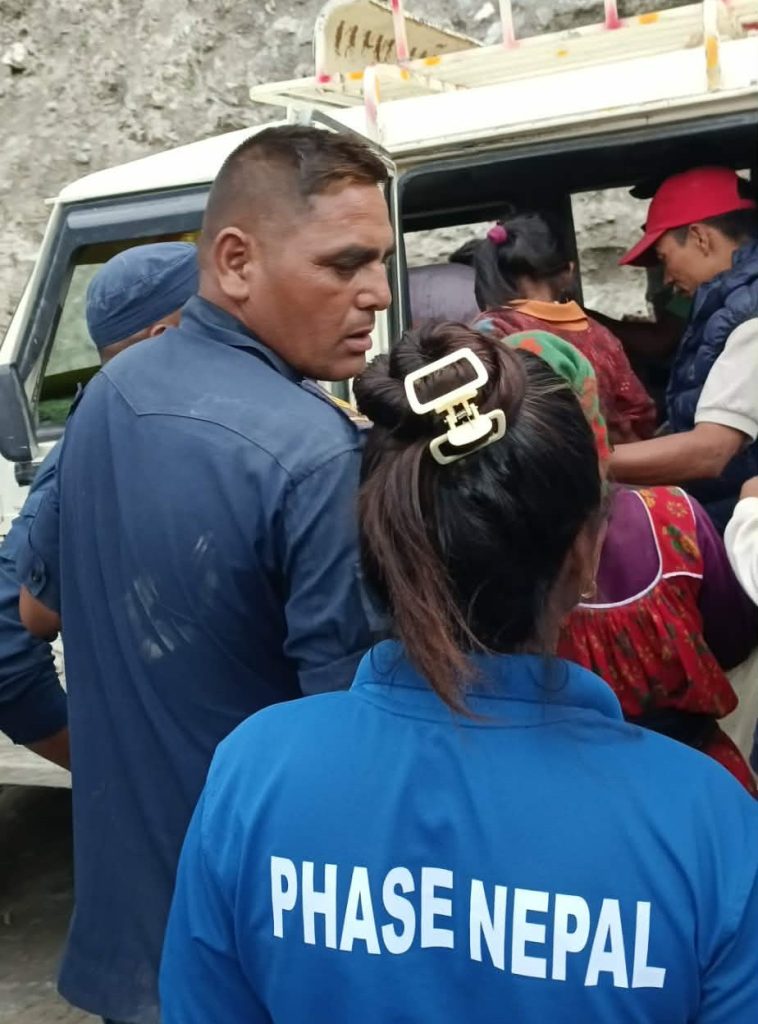
Shortly after the accident was reported, health workers from Rugin Health Post and PHASE Nepal mobilized immediately to provide emergency assistance. Given the difficult terrain and the distance from advanced medical facilities, every minute was critical. PHASE Nepal team reached the injured passengers as quickly as possible and began assessing those with life-threatening injuries.
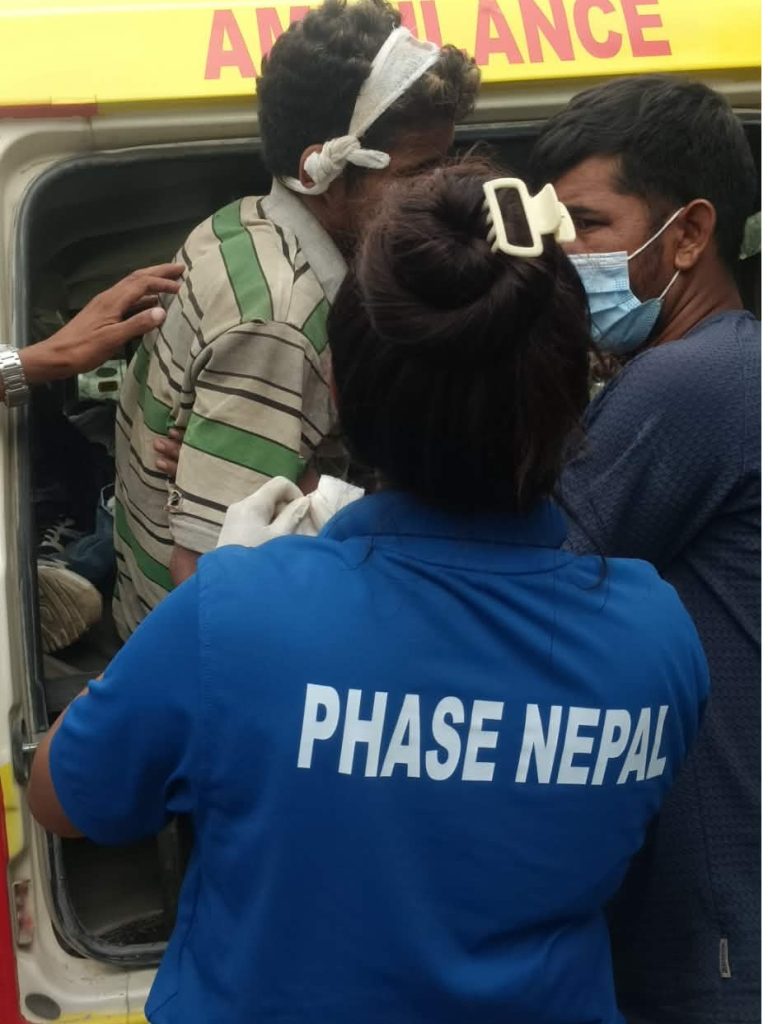
The four critically injured patients received emergency treatment inside the ambulance before transportation. Medical interventions included rapid assessment, intravenous fluid resuscitation to stabilize circulation, bleeding control, wound management, pain relief, and administration of essential emergency medications. Once stabilized, these patients were urgently referred to Kolti Hospital for advanced medical care.
Meanwhile, PHASE Nepal health workers remained at the accident site to assist the other injured passengers. First aid was provided to those with less severe injuries, including wound dressing, bleeding control, pain management, and continuous monitoring until they could be safely transported for further treatment. Despite the challenging conditions, close coordination between the health workers, ambulance team, PHASE Nepal and local responders ensured that every injured passenger received timely medical attention.
Sadly, despite the best efforts of the medical teams, two male patients with critical injuries succumbed to their injuries during treatment at Kolti Hospital. The remaining patients continued receiving appropriate medical care and follow-up treatment.
This incident serves as a reminder of the everyday challenges faced by health workers and communities in Nepal’s remote mountain regions. In areas like Bajura, emergency response is often complicated by rugged geography, long travel times, poor road infrastructure, and limited access to higher-level healthcare facilities. These factors can significantly influence patient outcomes, particularly in cases involving severe trauma.
At the same time, the incident demonstrates the vital importance of rapid pre-hospital emergency care. The immediate response by the teams from Rugin Health Post and PHASE Nepal, combined with coordinated referral and transport, ensured that injured patients received lifesaving interventions as early as possible. While not every life could be saved, the swift actions of the responders helped stabilize multiple patients and provided them with the best possible chance of recovery.
Road traffic accidents remain a recurring concern in many rural parts of Nepal where roads are still unpaved and difficult to travel, especially during the rainy season. Improving rural road safety, strengthening emergency medical services, and expanding access to quality healthcare remain essential steps toward reducing preventable deaths and injuries in these vulnerable communities.